


What’s a Book Today?: BODIES & BOTS #28
 Reading Time: 2 minutes
I didn’t start my career in brand marketing (where I spent most of my adult life).
I started it in book publishing. I even got my graduate degree in it from NYU.
So when I decided to tell my life story at 70, I asked myself a simple question:
Why am I trying to squeeze a 2026 story into a 500-year-old format?
Don’t get me wrong. I love books and magazines. The real ones made of paper. I still go to the library every week, just like I did at 10. I read them by the pool, fall asleep with one in my hands, and track each one on Goodreads.
But readers don’t consume stories the way they used to. They binge serialized content. They read graphic novels. They subscribe to newsletters. They scroll, scroll, and scroll some more. They expect visuals, community, and conversation.
Plus, the thought of sitting in a memoir-writing workshop for hours on end gave me the ick. I’m not a classroom learner.
So instead of writing a traditional memoir, I’m experimenting with what I call an “un-book.”
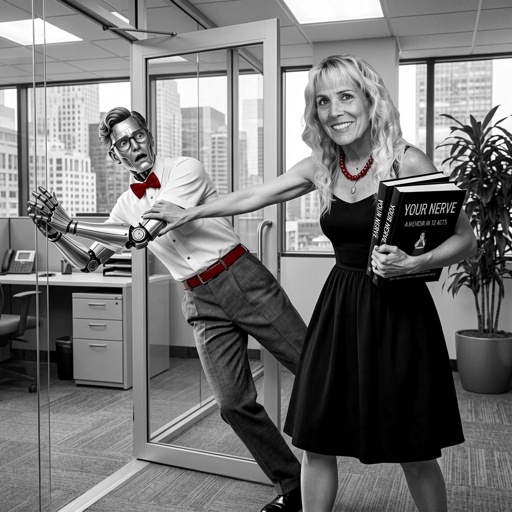
YOUR NERVE blends memoir, self-help, graphic storytelling, AI-generated artwork, family photo albums, and serialized chapters into one evolving experience.
Will it work?
Ask me in a year.
Or, better yet, give me immediate feedback.
Because that’s the beauty of digital publishing. I can make changes constantly. I can talk to my fans…and my foes…in real time.
After spending decades watching publishing evolve, one thing seems obvious:
Stories change. Readers change. Publishing changes. Maybe the format should, too.
Here’s my “Cliff Notes” version of how we got here…
Who Controls the Story?
A VERY Brief History of Publishing
Rather than plopping a graphic into this post, I tested my “vibe coding” skills by publishing my historical “digital comic book” recap. Flip through it here. 
My Own Publishing Wild Ride
- Legal publishing editor (US Tax Week at Matthew Bender)
- Graduate thesis on women in publishing leadership (~4% women CEOs in the 1980s → ~20% today)
- Publishing marketer (health, business, and other boring-but-lucrative sh*t)
- Financial services & fintech marketer (with a return to publishing at Reed/RX, which ironically owned Matthew Bender)
- Founder of theONswitch marketing
- Self-published business, AI, and self-help comic books under the nunu ventures imprint
- Blogger → Medium → Substack
- Creator of a serialized digital “un-book” and community
What’s My “Un-Book?”
✔ Memoir
✔ Self-help
✔ Graphic novel
✔ AI-generated visuals from family photo albums
✔ Serialized chapters
✔ Subscriber community
✔ Unfiltered truths & snark
Bottom Line?
I didn’t abandon book publishing. I simply stopped waiting for permission to publish my own story.
I blew up the book-publishing model… for me.
And I pushed one more book bro out of his corner office and took his chair. 🙂
Subscribe to YOUR NERVE here!