


Help Me Help You: BODIES & BOTS #17
 Reading Time: 4 minutes
HELP!
When my kids were growing up, I juggled a big job, a big house, big boss demands, big team needs, and big insecurities. I tried to handle everything myself and paid the price in the long term. I was often stressed, resentful, cranky, tired, and even livid.
As I share in YOUR NERVE, I suffered some micro-traumas as a little girl and didn’t get the kind of help I really needed. When I (shyly) asked for help, I was sometimes ignored.
I’ve only recently learned:
- How to really figure out what I need help with and who the best person to ask is.
- Ways to ask for help without coming across as either whiny or demanding.
- Who deserves my help and how to set boundaries.
It only took 70 years.
I’m not a therapist or one of those pop-psych TikTok coaches everyone seems to love these days.
But I DO now know the importance of help and how it can impact both mental and physical health. So, what better month than Mental Health Awareness Month to kick off my “Mayday” theme?
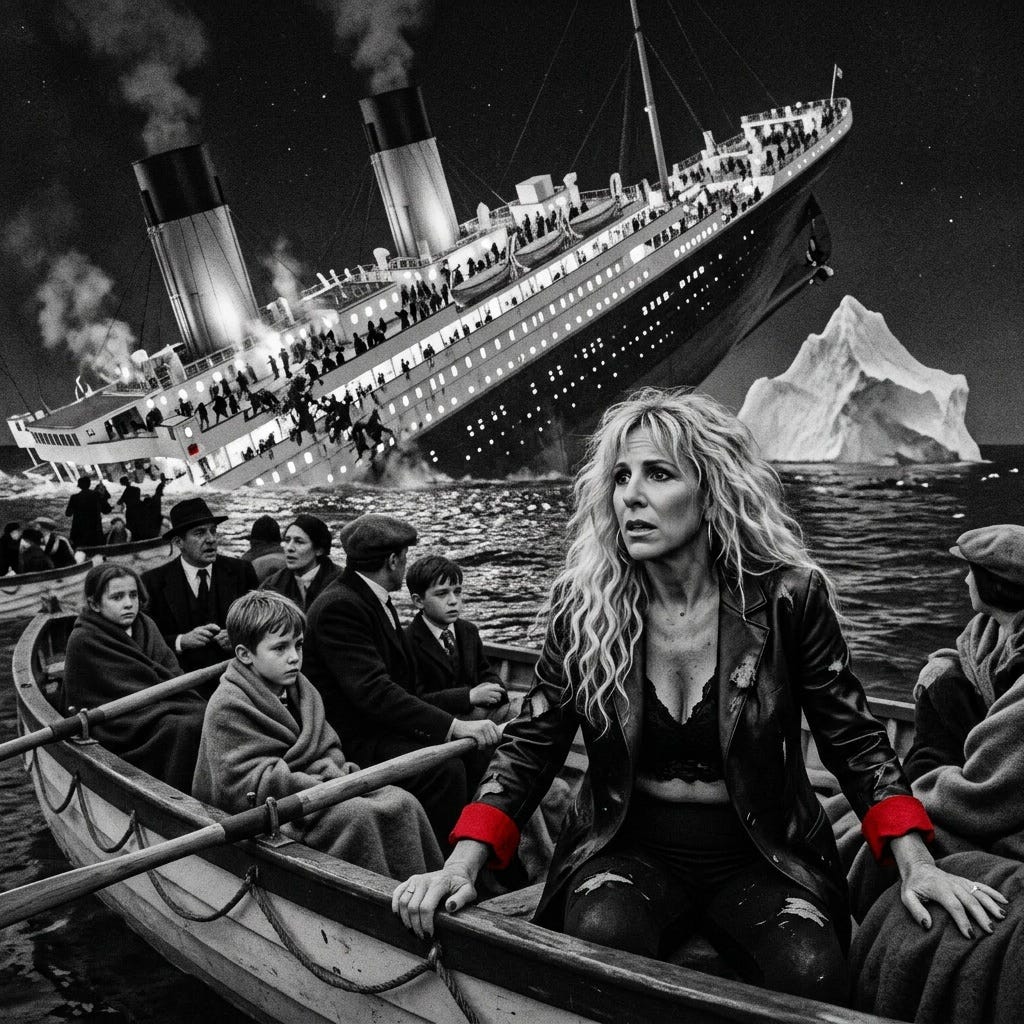
Mayday (May 1st), by the way, is not a holiday. It’s a distress call.
The word comes from the French. M’aidez. It literally means: help me.
We humans often need help. It’s getting it that means everything!
If you want to see ways technology…specifically AI…can help, please follow me on Substack. That would be helpful to both of us.
Or, you can read about my semi-traumatic childhood here. Chapter 2 will be a doozy!
A Brief, Uncomfortable History
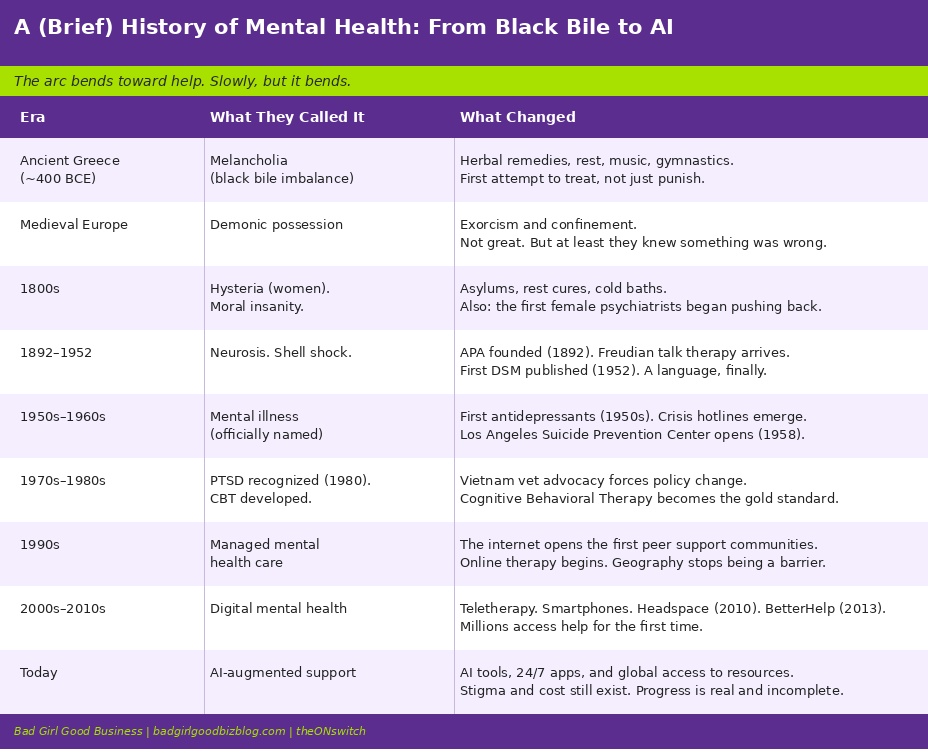
Mental illness didn’t have a name for most of human history. It had consequences.
Ancient Greeks blamed an imbalance of black bile. Medieval Europe blamed demons. The 18th century invented asylums, which were warehouses with very bad PR.
Women were especially vulnerable to a diagnosis of “hysteria” — a medical term that essentially meant “we don’t understand you and you are inconvenient.” The prescribed treatment was often institutionalization, enforced rest, or marriage. Depending on the family’s preference.
Sigmund Freud arrived around 1900 and at least gave suffering a language, though he also blamed mothers for almost everything. The American Psychological Association was founded in 1892. The first edition of the Diagnostic and Statistical Manual of Mental Disorders didn’t appear until 1952. Shell shock, the thing that broke an entire generation of World War I soldiers, wasn’t officially recognized as PTSD until 1980.
That’s a 60-year gap between the wound and the diagnosis.
The Facts We Need to Talk About
- 1 in 5 American adults experiences a mental health condition every year.
- Only 46% of them receive any treatment. Cost and stigma are still the top two barriers.
- People overestimate by 50% how often someone will say no when they ask for help. So they don’t ask.
- Women are significantly more likely than men to experience depression or anxiety, and are still routinely dismissed or undertreated when they report symptoms.
- Untreated mental health conditions cost U.S. employers $1 trillion per year in lost productivity.
Giving. Getting. Asking.
Three modes. Most of us are stuck in one.
- Giving is the easy one. It puts you in control. Nobody questions your motives.
- Getting help is harder. It means admitting something isn’t working, which most high-functioning people treat as a personal failure.
- Asking is the hardest thing most people never do. It requires vulnerability AND the risk of being told no. Somewhere along the way, most of us decided that risk wasn’t worth taking.
I handled it alone for decades. Or didn’t handle it, and then got quietly furious at everyone for not noticing.
Seven decades in, I’m finally better at it. Not perfect. Better.
So. What Do You Need?
Not rhetorical.
May is a good month to actually answer that question. For your business. Your relationships. Your brain. Your body. Your capacity to keep doing all of this without the quiet fury eating you alive.
What would you ask for if you already knew the answer would be yes?
Start there.

(4 more resources, because I like to help you expand your mind.)
 |
Harvard Medical School discusses why people often don’t get help. |
 |
Two of my fave “self-help” books: |
 |
The dangers of “TikTok therapy” |
 |
Mental health and AI…the good, the bad, and the weird |
What do I need? I think I always need love. In fact, we all need it. So sending some your way for this post!
Love you back, fan girl! We need to all support each other! xo