


Brands Without Soul Don’t Last. Neither Do Their CEOs: BODIES & BOTS #14
 Reading Time: 8 minutes
Brands die. Souls don’t.
Especially in our AI-centric ecosystem, humanity may be more important than ever.
First, a personal anecdote (because AI told me that you like that)…
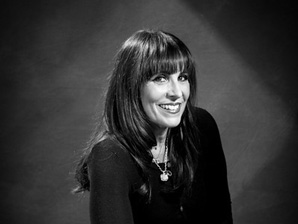
I was a feisty, quirky little kid. Painfully shy, but overcompensating. Smiling for the camera while internally managing a dumpster fire.
That was me at seven. Still me at seventy.
Family, career, lifelong friendships, and hard-won accomplishments. Those got added on over the decades. What changed?
- I stopped caring about trivial things.

To read the whole story of my chubby girl era, subscribe to YOUR NERVE.
- I know who I am inside. I know my values.
- I know what I want to do for work and play, who I want my friends, lovers, and neighbors to be (the topic for next week!), what I want to sell (or not), which AI agents and other tech belong in my business and life, and who I want to work with.
- I started loving myself more. Took long enough.
- As for my business, I stopped taking on clients who didn’t value my talents and time or wanted a tactician rather than a visionary. I learned new AI skills and track trends to ensure my brand remains relevant to prospective clients.
That’s a cleaned soul. That’s a “brand” that can’t be easily replicated.
A classmate from second grade told me (as an adult) that his mother remembered me as nice, funny, smart, creative, and kind. I’ll take it. Those are not bad brand attributes for a little girl…or an adult.
Most brands and most people never get there. They skip straight to tactics. They never ask the questions that actually matter:
Who/what am I? And who/what am I TODAY? What UNIQUE value do I (or my product or service) bring to others?
Those principles apply to both chubby little girls and major international corporations (and everything and everyone in between).
The Brands That Died (And Why)
Almost 90% of companies that were thriving in 1955 have since perished, faded, or been absorbed beyond recognition.
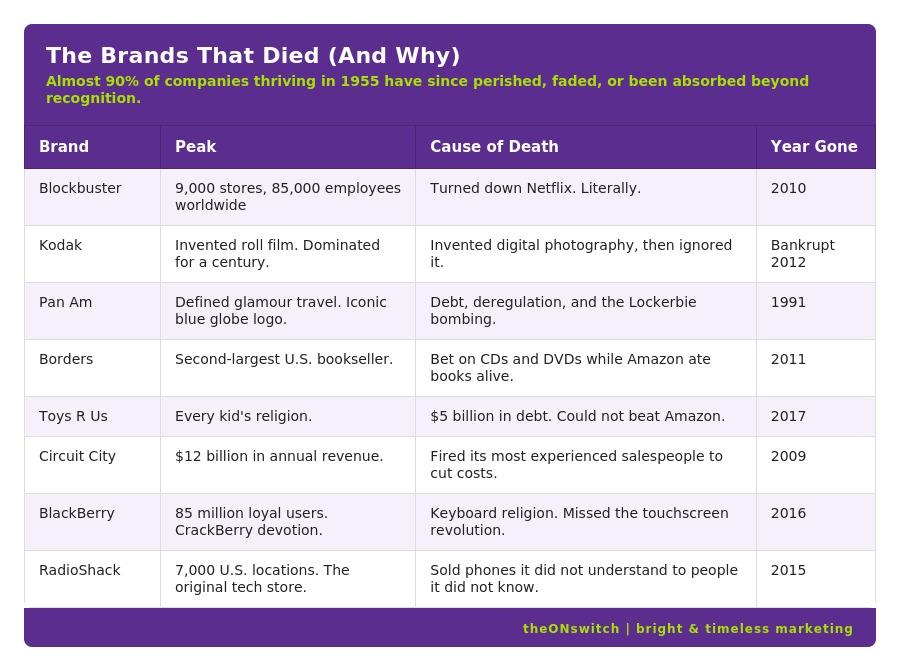
Every single one of these had a brand. A logo. Recognition. Decades of trust.
What they did not have was clarity about who they were at their core, separate from the products they happened to be selling at the time. The moment the product became irrelevant, there was nothing underneath it.
The Ones Who Came Back
Coming back from the dead requires knowing what you actually stood for in the first place. The brands that pulled it off figured that out.I was part of that last one. I know what it felt like in those rooms when the Priceless campaign launched. Nobody knew it would become the longest-running campaign in history. What we knew was that it was true. It named something people already believed but had never heard said back to them.
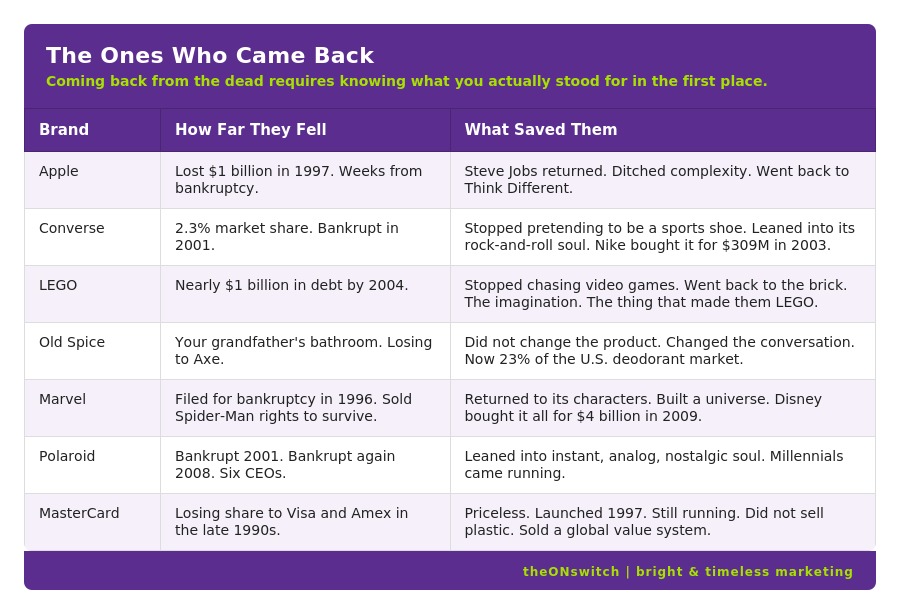
That is a soul-based brand. You cannot manufacture it. You can only find it, if you are honest enough to look.
The Ones That Never Had to Come Back
Some brands never fell because they never forgot who they were. The form evolved. The soul did not.
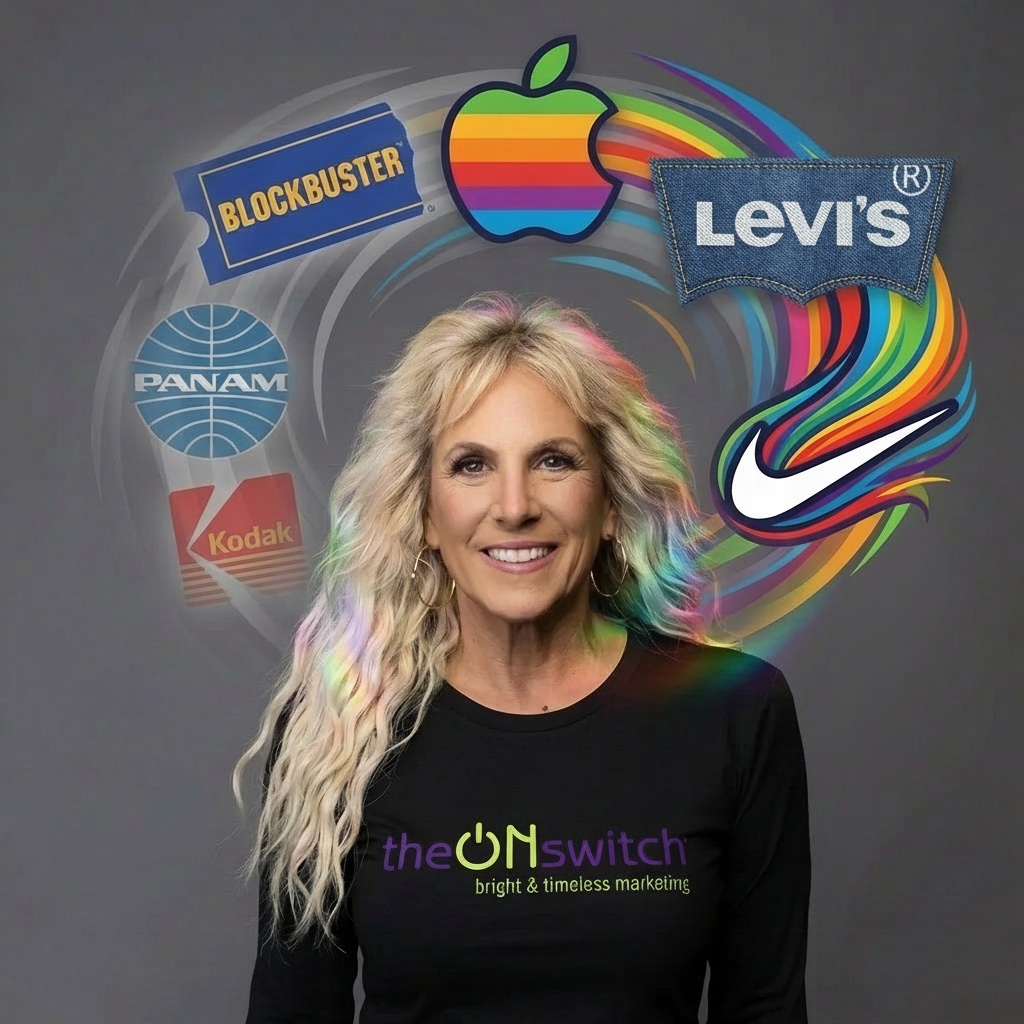
The first five on this list have been around since before your grandparents were born. The last three were built in your lifetime. All eight share the same spine.
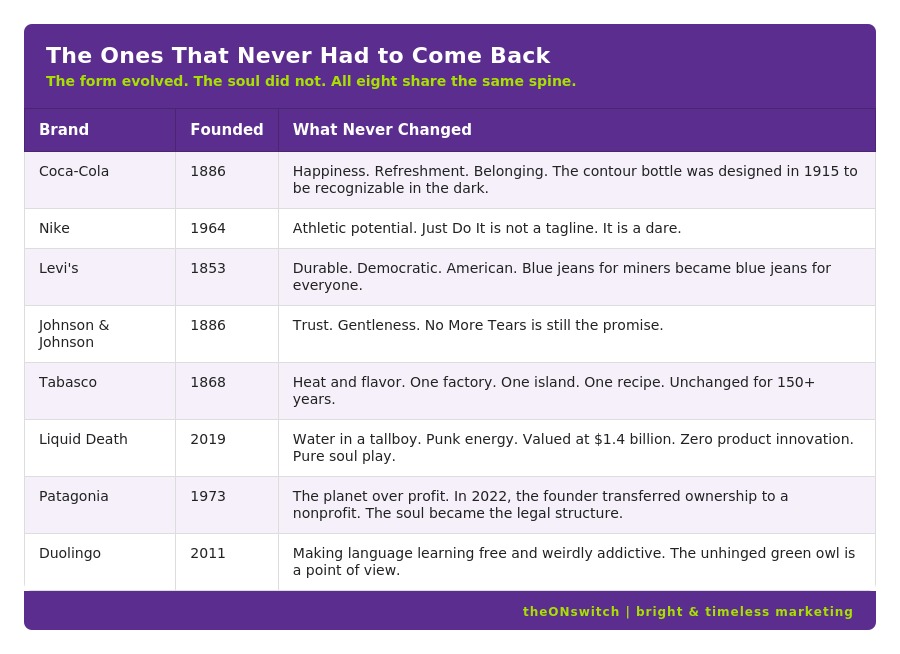
What do they share? They all answered the hard questions before they started selling anything. And they never confused the bottle with the formula.
When Personal Brands Meet Product Brands
Celebrities endorsing products is not new. It is as old as fame itself.
The difference used to be at least the pretense of a match.
- Ted Mack’s Original Amateur Hour (1948-1970). Sponsored by Geritol, a tonic for tired
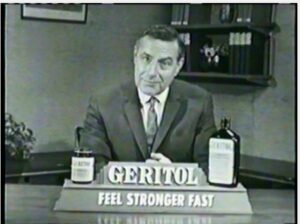 blood, because Geritol wanted old viewers and Mack had them. When the show was canceled, Geritol moved its money to Lawrence Welk. Same audience. Different band. No soul required on either side.
 - Denise Austin for Idaho Potatoes (2004-2012). Fitness expert plus complex carbohydrates is at least a coherent sentence. The alignment was real enough. But nobody remembers Denise Austin because of potatoes. Her brand was never defined by what she endorsed.
- Steven Tyler for Skittles (Super Bowl 2016) and Sabrina Carpenter for Pringles (Super Bowl 2026). A decade apart, same principle. An aging rock god and rainbow candy. A pop star and a chip shaped like a smile. On paper, absurd. In practice, both worked because their souls were too specific and too loud to be swallowed by the product. Tyler’s four decades of Dream On. Carpenter’s entire brand is sly, cheeky, and slightly unhinged. One Pringles ad cannot dent that. The soul survives the punchline.
At Super Bowl LX this year, over 30 brands paid for celebrity spots. Lady Gaga, the Backstreet Boys, Ben Affleck, Matthew McConaughey, and Kendall Jenner. Some felt inevitable. Many felt interchangeable. The difference, as always, was whether anyone asked if the soul matched before signing the check.
That is the key distinction. The personal brands that survive their endorsements are the ones with a soul that exists completely independently of any deal they sign.
Now scroll to your Instagram feed.
How many people with a million followers have endorsed cryptocurrency, detox tea, a fast fashion drop, a mattress brand, and a meal kit service in the same calendar year? Each one paid. None of them connected. No thread runs through any of it. That is not influence. That is a billboard that happens to have a face.
Fame fades. A brand built on nothing but visibility has nothing underneath it when it does. (Watch for my May 2026 article about the impact of social media and reality TV on the mental health of influencers and the rest of us.)
True influence accumulates over time and comes from a coherent point of view. You know what Steven Tyler stands for. You know what Oprah stands for. You know what Gloria Steinem stands for. Their endorsements either reinforce that identity or feel so deliberately absurd that the contrast itself is the joke, and the soul survives the punchline.
The influencer economy has largely decoupled fame from soul.
Follower counts and engagement rates are not a brand. They are a metric. And metrics without meaning are just numbers on a screen.
The brands and people who last are the ones who know the difference.
Brand Bruises (And What You Do With Them)
Every brand gets hit eventually. The ones that survive knew who they were before the bruise happened.
- Tylenol. Someone laced capsules with cyanide. J&J pulled 31 million bottles before anyone told them to. They invented the tamper-resistant bottle. Within a year, market share was back.
- Chipotle. E. coli, norovirus, salmonella. Stock dropped 40%. Three years and a new CEO brought the brand back.
- theONswitch. My roster was heavy in real estate and events in 2008. Both collapsed. I lost almost everything. Over the years, I’ve trusted some of the wrong people. I believed their “brand hype.” We’ve all been there.
- The anonymous brand in the wild. I recently attended a major retail grand opening. The local team was warm, engaged, and genuinely excited. Then I introduced myself to the corporate marketing executive. A little cold and dismissive. No smile. Done with me in thirty seconds. I left, reconsidering whether I wanted to spend money there at all. Every human touchpoint is a brand moment now, especially when bots are handling everything else. The local team had soul. Corporate has a P&L and titles. (I’m not being harsh…I used to have that marketing job, handling stressful grand openings for a big company.) Smiles are still free and meaningful.
What gets us back from downturns is not necessarily a total rebrand. Sometimes it’s just rediscovering your brand soul. It’s true in branding and break-ups.
Bruises heal. The flesh underneath them is still there.
The Question Most People Never Ask
Before the content calendar. Before the logo refresh. Before you hire the social media manager.
What do you stand for? What makes you unique and timeless?
Not what your industry expects. Not what your clients want to hear. Not what sounds impressive in a pitch deck.
What is the immutable thing? The core that does not change when the platform changes, when the economy changes, when the market shifts?
What does prosperity mean to YOU?
Not the metric on your dashboard. Not what your parents defined as success. Not the LinkedIn version of your life.
My tagline for theONswitch was once Powerful Marketing. Very early 2000s. Very shoulder-pad era. I changed it to Bright and Timeless Marketing. Not because I got softer. Because I got clearer. Media come and go. Platforms rise and collapse. Soul is forever. That is the only thing that is actually timeless in this business.
And if you read YOUR NERVE (coming soon), you will know that the feisty seven-year-old managing a dumpster fire has been the through-line of every professional chapter, every reinvention, every pivot.
She did not change. She just got better at knowing herself. That is the cleaning.
Will AI Kill Your Brand’s Soul? Or Save It?
The jury is still out. Nearly 70% of marketers are already using AI for brand content. The risk is that when millions of brands use the same tools with similar prompts, they end up with variations of the same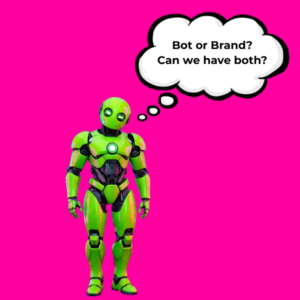 output. Polished. Proficient. Forgettable.
- The upside: AI is the best brand archaeologist ever invented. Feed it your history, your customer data, your best work, and it will surface patterns your own team stopped seeing years ago.
- The downside: AI trained on everyone’s content naturally pushes toward the middle. The safe word. The expected tone. When every brand sounds the same, you are not building equity. You are adding to the noise.
- The bottom line: AI can help you find your soul. It cannot give you one. Do the soul work first. Then use the technology to amplify what is already true.
What is under your brand’s dust bunnies?
Part of my brand promise is “education.” I call it BRAINBAIT. So, here’s more stuff that will make you smarter:
 |
|
 |
When compatible brands team up, great things can happen:
|
 |
Fakes!
|
 |
Ready to build a brand with soul? |
Written with my AI collaborator (Beulah).